
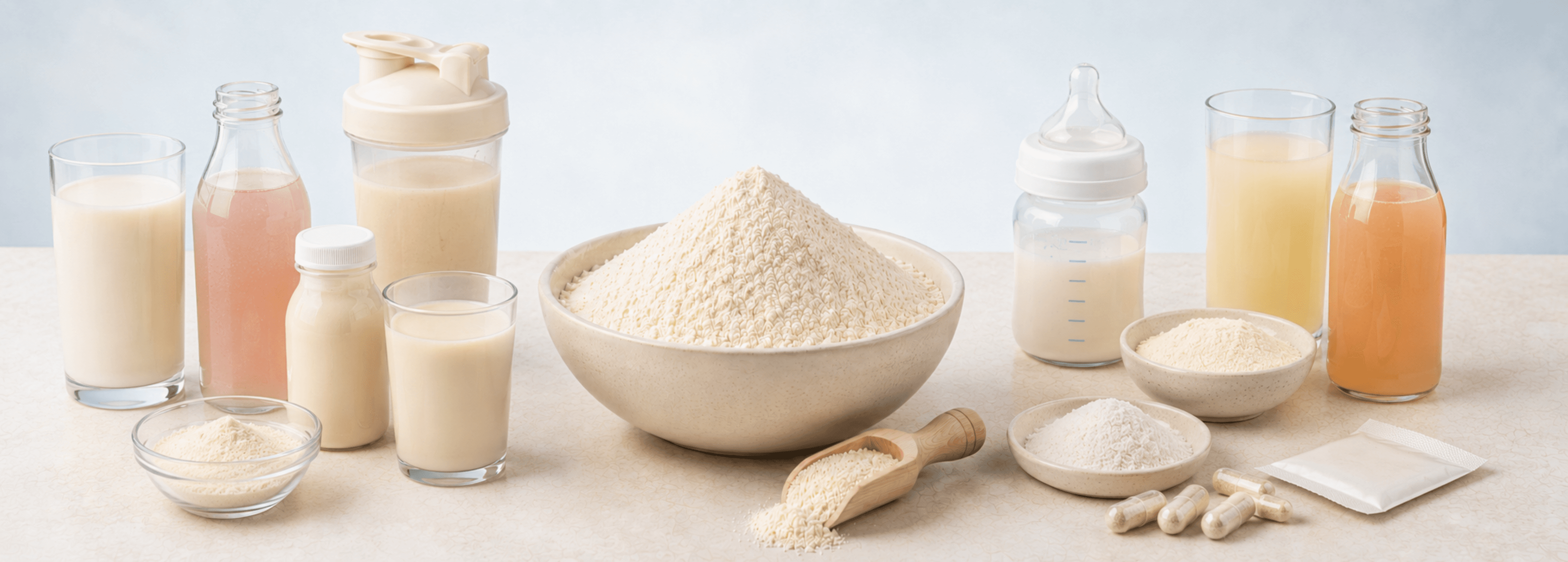
Whey Protein Hydrolysates
Whey Protein Hydrolysates
Sub-category: Whey & Performance Proteins
Sub-category: Dairy Proteins & Protein Hydrolysates
Functional & Technical Characteristics
Controlled Enzymatic Hydrolysis: Whey proteins are broken into smaller peptides to support easier digestion and faster nutrient delivery.
Multiple Hydrolysis Levels: Different grades provide tailored nutritional and functional performance.
37% DH: Extensively hydrolysed for specialized nutrition requiring smaller peptides, rapid digestion, reduced allergenicity, clarity, and acid stability.
12–13% DH: Moderately hydrolysed, providing a balance of rapid protein delivery, solubility, flavour, and functionality.
7.5–8% DH: Mildly hydrolysed, offering improved digestibility while retaining a comparatively mild flavour and useful food-system functionality.
High-Quality Whey Protein: Provides essential amino acids, including branched-chain amino acids.
Improved Digestibility: Hydrolysis reduces protein-chain size, making the protein easier for the digestive system to process.
Rapid Protein Delivery: Smaller peptides support faster amino-acid availability compared with intact whey protein.
Good Solubility: Suitable grades disperse effectively in ready-to-mix and liquid nutrition systems.
Low-Viscosity Potential: Selected hydrolysates can deliver meaningful protein content without excessive viscosity.
Specialized Stability: Certain grades provide acid stability, clarity in solution, or improved heat-processing performance.
Variable Sensory Profile: Bitterness may increase as the degree of hydrolysis increases, making flavour selection and masking important.
Applications
Whey Protein Hydrolysates are widely used in applications requiring enhanced digestibility and targeted protein delivery:
Sports and performance-nutrition supplements
Pre-workout, intra-workout, and post-workout products
Ready-to-mix protein powders
Ready-to-drink nutritional beverages
Clinical and medical-nutrition formulations
Specialized and easy-to-digest protein systems
Protein gels, gummies, and nutrition bars
Capsules and tablet-based supplements
Functional foods and protein-fortified products
Eligible infant and specialized nutrition formulations, subject to regulatory and product-specific requirements
Key Benefits in Formulation
Faster Nutrient Availability: Hydrolysed peptides support more rapid digestion and absorption than intact whey proteins.
Grade-Specific Performance: Different hydrolysis levels allow formulators to balance digestibility, flavour, solubility, and finished-product functionality.
Sports-Recovery Support: Delivers high-quality amino acids for performance and recovery-focused nutrition products.
Digestive Comfort: Can be suitable for consumers requiring more easily digested protein systems.
Reduced Allergenicity Potential: Extensively hydrolysed grades may provide reduced allergenic protein characteristics when appropriately validated.
Flexible Delivery Formats: Suitable for beverages, powders, bars, gels, gummies, capsules, and tablets.
Processing Versatility: Selected grades offer low viscosity, acid stability, heat stability, or clarity for technically demanding formulations.
Efficient Protein Fortification: Adds high-quality dairy protein and essential amino acids across nutritional applications.
Customizable Sensory Performance: The hydrolysis level can be selected according to the required balance between rapid digestion and flavour quality.
Quality & Sourcing Perspective
At Abhaya International LLP, Whey Protein Hydrolysates are selected with attention to product identity, degree of hydrolysis, protein content, peptide profile, solubility, lactose and fat levels, microbiological quality, sensory performance, and batch-to-batch consistency.
The selected grade should be matched to the intended nutritional purpose and finished-product format. Supporting specifications, certificates of analysis, allergen declarations, Halal and Kosher documentation, microbiological standards, and applicable regulatory information should be reviewed for each supplied batch.
Hydrolysis level can influence flavour, bitterness, viscosity, clarity, heat stability, and allergenic characteristics. Application trials, flavour-masking work, dosage evaluation, and finished-product stability testing are therefore recommended before commercial production.
Any infant-nutrition, clinical-nutrition, medical-food, or reduced-allergen positioning must be assessed against the specific grade, applicable regulations, and the requirements of the finished formulation.


Contact Information
Our Offices
Let's Connect
Fill in your details and our team will get back to you.